

Complex 2026 gaming
The Hardware Landscape in 2026: More Iterations, More Choices
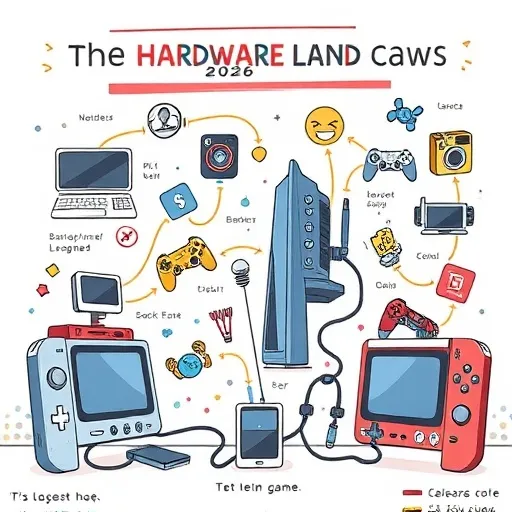
If you've been following video game news 2026 at all, you've probably noticed that the hardware market has become wonderfully complicated. We're way past the days of a simple two-console world. This year alone, we've watched a steady stream of mid-generation refreshes, handheld PCs picking up serious momentum, and cloud gaming devices finally connecting with mainstream audiences instead of just early adopters. The video game news 2026 cycle has basically been one long parade of new gaming hardware options.
What's really interesting is how the conversation has shifted. A few years back, the big question was "which console should I buy?" Now it's "which combination of devices actually fits my lifestyle?" Portable gaming hardware has been the standout story here. Multiple manufacturers have rolled out handheld devices that run full, console-quality titles, and the performance gap between these portables and traditional home consoles has shrunk dramatically. That's a huge deal for video game news 2026 watchers who remember when "portable" meant serious compromises.
Industry analysts I've talked to say this diversification is genuinely healthy for competition. When players have more options, platform holders have to work harder to earn attention. That usually means better services, more aggressive pricing, and a sharper focus on exclusive content — all of which benefits us, the players. It's one of the more encouraging threads running through video game news 2026.
What Diversified Gaming Hardware Options Mean for Buyers and Price Tiers
- More price tiers: Entry-level options are more accessible than ever, while premium devices cater to enthusiasts chasing maximum performance.
- Cross-device play is standard: The days of being locked into a single ecosystem are fading fast. Most major multiplayer titles now support cross-play and cross-progression by default.
- Subscription fatigue is real: With so many services competing for your monthly fee, curation and value matter way more than raw catalog size.
Honestly, the constant drip of video game news 2026 about refresh models and new form factors can feel dizzying, but it's a good kind of dizzy. More choices mean you can match hardware to your actual habits — commute, couch, or cloud — instead of forcing one box to do everything.
Subscription Services and the Evolving Business Model Debate
Speaking of subscriptions, this has easily been one of the most contentious topics in video game news 2026. Game subscription catalogs have matured a lot, and the debate over how these services affect developer compensation and player choice has only gotten louder.
On one side, you've got players who adore the all-you-can-play model. It lowers the barrier to entry and lets you experiment with genres you'd never otherwise touch. On the other side, there are legit concerns about discoverability, long-term revenue sustainability for smaller studios, and the risk of devaluing individual purchases. Both sides show up constantly in video game news 2026 op-eds.
This year we've seen some fun experiments. A few publishers started offering tiered access — day-one releases at a premium tier, catalog titles at a basic tier — while others doubled down on the traditional premium purchase model and positioned themselves as the "quality over quantity" alternative. It's a fascinating tug-of-war, and there's no single right answer. What matters is that the industry keeps experimenting and listening to feedback.
Game Preservation and Archival Efforts Gaining Mainstream Momentum
Here's a topic gaining serious steam in video game news 2026: preservation. For years it lived in niche communities and academic circles, but this year it went mainstream in a big way. Several major initiatives launched to archive and maintain access to older titles — everything from emulation projects (some official, some… less so) to museum partnerships and industry-funded archival efforts.
The realization is setting in that games are cultural artifacts, and losing access is a real problem — not just for nostalgia, but for historical and educational purposes. Digital storefronts have shown a willingness to delist titles when licensing expires, meaning games people paid for can simply vanish. The live-service model means many games are designed to shut down eventually, leaving nothing behind. Expect this to stay a hot thread in video game news 2026 all year.
Indie Scene Creativity, Funding Pressures, and Genre-Bending Trends
If you want pure, unfiltered creativity in video game news 2026, the indie scene is where it's at. Big-budget studios keep consolidating around established franchises, while independent developers push boundaries with experimental mechanics, bold art styles, and narrative-driven experiences that would never get greenlit elsewhere.
That said, there's a bittersweet undertone. Funding has tightened, and some high-profile indie studios had to scale back or restructure. The early-2020s investment boom brought a correction that's been painful. But the quality of games shipping is still remarkably high, and the tools available to independent developers have never been better — accessible game engines, open distribution, powerful community-building platforms. A team of three or four people can now reach a global audience.
- Short-form experiences: Games beatable in a few hours are finding eager audiences. Not everything needs to be a hundred-hour epic.
- Genre blending: Roguelike deckbuilders mixed with farming sims? Narrative adventures with puzzle combat? The rules get rewritten constantly.
- Community-driven development: Early access and open development have matured into genuinely collaborative processes between developers and players.
Esports Stabilization, Regional Circuits, and Player Welfare Challenges
Competitive gaming has featured prominently in video game news 2026 too. After a turbulent stretch — leagues restructuring, sponsors shuffling, viewership shifting — the scene seems to be stabilizing with a more sustainable approach. Organizers are more realistic now; the billion-dollar-league dreams gave way to grounded, community-focused structures. Regional circuits are thriving, and grassroots tournaments are once again a pathway for up-and-coming talent.
Competitive gaming is also integrating with broader entertainment — collaborations with music festivals, fashion brands, even educational institutions. The old stigma is basically gone. Still, challenges around player welfare, contract transparency, and career sustainability remain, and the industry is still figuring out fair solutions. It's a work in progress, but the direction looks positive in the video game news 2026 coverage.
AI Development Tools, Accessibility Technology, and the Human Creative Element
No roundup of video game news 2026 is complete without technology. The role of artificial intelligence in game development stays intensely debated. On the production side, AI-assisted tools handle everything from prototyping and asset creation to testing and localization. Proponents say it frees developers to focus on creative decisions. Critics worry about job displacement, content homogenization, and ethical concerns around training data.
My take? It's a tool, and impact depends on usage. The games that resonate most still have a clear human vision — distinctive art direction, a writer with something to say, a designer with a novel mechanic. AI can streamline the pipeline but can't replace the creative spark. Beyond AI, accessibility technology has impressed me — customizable controls, visual aids, audio cues, and difficulty flexibility are becoming an expected standard, not a nice-to-have. That's a genuine win, and it keeps showing up in the best video game news 2026 stories.
Player Communities, Post-Launch Transparency, and Grassroots Influence
One of the most encouraging trends in video game news 2026 is the growing influence of player communities. Between social media, streaming, modding scenes, and direct feedback channels, players have more avenues than ever to shape the games they love. Developers are responding — post-launch support is more transparent, roadmaps drop earlier, and community managers act as vital bridges. It's not always smooth (plenty of missteps and PR disasters), but the trajectory leans toward collaboration over top-down communication.
Community-driven events, fan-made content, and grassroots tournaments are becoming integral to the life of games. Sometimes the community keeps a game alive well beyond what the original developers could sustain alone. That's a powerful dynamic — and one more reason video game news 2026 keeps me optimistic.
Holiday Lineup Surprises, Policy Regulation, and Cloud Gaming Milestones to Watch
- Holiday lineup surprises: Studios have gotten better at keeping details under wraps. Expect announcements later than usual.
- Policy and regulation: Digital consumer rights, loot box legislation, and data privacy are all active. Government action could reshape how games are sold and played.
- Cross-media expansion: Games are increasingly launchpads for films and series, and adaptation quality is improving.
- Cloud gaming's coming-out party: Latency and infrastructure have improved. If pricing stabilizes, this could be the year cloud gaming goes truly mainstream — a storyline worth tracking in video game news 2026.
From tiny indie gems to blockbuster spectacles, there's more variety and accessibility than ever. The hardware is better, the tools are more powerful, and the community is more connected. There are real issues to address, but every fresh batch of video game news 2026 reminds me why this industry stays exciting.